Picture this: A potential client searches for your services online, lands on your website, and leaves within three seconds. Not because you lack quality services or competitive pricing, but because the page loaded slowly, text overlapped on their phone screen, or they couldn’t figure out where to click.
In 2026, a website isn’t just a digital business card—it is often your primary storefront, salesperson, and brand ambassador rolled into one. When a site feels outdated, clunky, or frustrating to navigate, it creates immediate friction. Effective web design goes far beyond aesthetics. It directly impacts your credibility, user experience, mobile usability, search engine visibility, and bottom-line conversions.
Here is a comprehensive look at why web design is important for business success today and how modern layout choices can transform casual visitors into loyal customers.
Why Is Web Design Important?
At its core, website design dictates how a visitor interacts with your brand. It shapes that crucial first impression within milliseconds, determining whether a user stays to explore or clicks away to a competitor. Good design creates a natural flow, making it effortless for people to digest information and take action.
Web Design Creates a Strong First Impression
Your website is frequently the very first touchpoint a prospective customer has with your business. Elements like color palettes, clean typography, high-quality imagery, and uncluttered navigation work together to form an immediate opinion. A cohesive, modern design communicates that your company is active, attentive, and professional.
Web Design Builds Brand Credibility
Trust is hard to earn and easy to lose online. A polished website reinforces professionalism at every step of the customer journey. When design elements—such as fonts, brand colors, and message formatting—are consistent across every page, visitors feel secure interacting with your business and sharing their contact details.
Web Design Helps Generate More Conversions
Visual appeal gets users through the door, but strategic layout turns them into paying clients. Intuitive navigation paths, clear calls-to-action (CTAs), persuasive content placement, and frictionless contact forms actively guide users toward calling your office, booking an appointment, or making a direct purchase.
Why Is Web Design Important for Business?
From a business standpoint, design is a strategic growth tool. It connects your operational goals—like lead generation and market differentiation—with actual user behavior.
It Helps Your Business Stand Out From Competitors
Many industries suffer from generic, cookie-cutter online presences. Distinctive visual hierarchy, tailored multimedia, and a seamless user experience immediately set you apart from competitors relying on outdated templates.
It Supports Lead Generation and Sales
A well-designed site acts as a 24/7 sales pipeline. Strategically structured service pages, specialized landing pages, easy-to-use booking tools, and visible phone numbers work together to turn raw traffic into measurable business opportunities.
It Helps Customers Find Information Faster
If visitors have to hunt for basic details, they will abandon the effort. Thoughtful information architecture, scannable headings, visible search bars, and clear page organization allow users to find exact answers in seconds.
Why Is Responsive Web Design Important?
Responsive web design ensures that a website automatically adapts its layout, images, and utility to match whatever screen size the visitor is using—whether that’s a smartphone, tablet, laptop, or ultrawide desktop monitor.
More Customers Browse on Mobile Devices
Designing exclusively for desktop users is an outdated strategy. Today, a huge portion of web traffic originates from mobile devices. If a site fails to render cleanly on a phone, you risk instantly alienating more than half of your potential audience.
Responsive Design Improves User Experience
Nothing ruins a mobile browsing session faster than pinch-zooming, horizontal scrolling, tiny unclickable text, or overlapping buttons. Responsive design eliminates these usability hurdles, keeping navigation smooth regardless of screen size.
Responsive Design Supports SEO
Having a single responsive URL structure rather than separate desktop and mobile sites makes crawling and indexing far easier for search engine bots. It prevents duplicate content issues and consolidates link authority onto one domain.
How Web Design Affects User Experience
Users judge a site based on how easily they can accomplish their goals. A visually stunning layout offers little value if the underlying structure makes simple tasks frustrating.
Easy Navigation Keeps Visitors Engaged
Clear header menus, logical page hierarchies, descriptive labels, and internal links keep users exploring your content longer, lowering bounce rates and deepening engagement.
Clear Calls-to-Action Guide Visitors
Visitors shouldn’t have to guess what step to take next. Strategically placed buttons—whether asking them to request a quote or call directly—provide clear direction throughout their journey.
Accessibility Makes Websites Easier to Use
Accessible design principles (such as high-contrast text, screen-reader-friendly structure, and keyboard navigation) ensure every visitor can interact with your site, regardless of their physical or cognitive abilities.
Web Design and Website Performance
A sleek visual aesthetic means very little if your pages lag, shift unexpectedly, or fail to load. Design choices directly impact technical performance.
Page Speed Matters to Visitors
Modern internet users expect immediate answers. Unoptimized heavy image files, excessive scripts, and cluttered layouts slow down load times, leading to high abandonment rates before users even read your message.
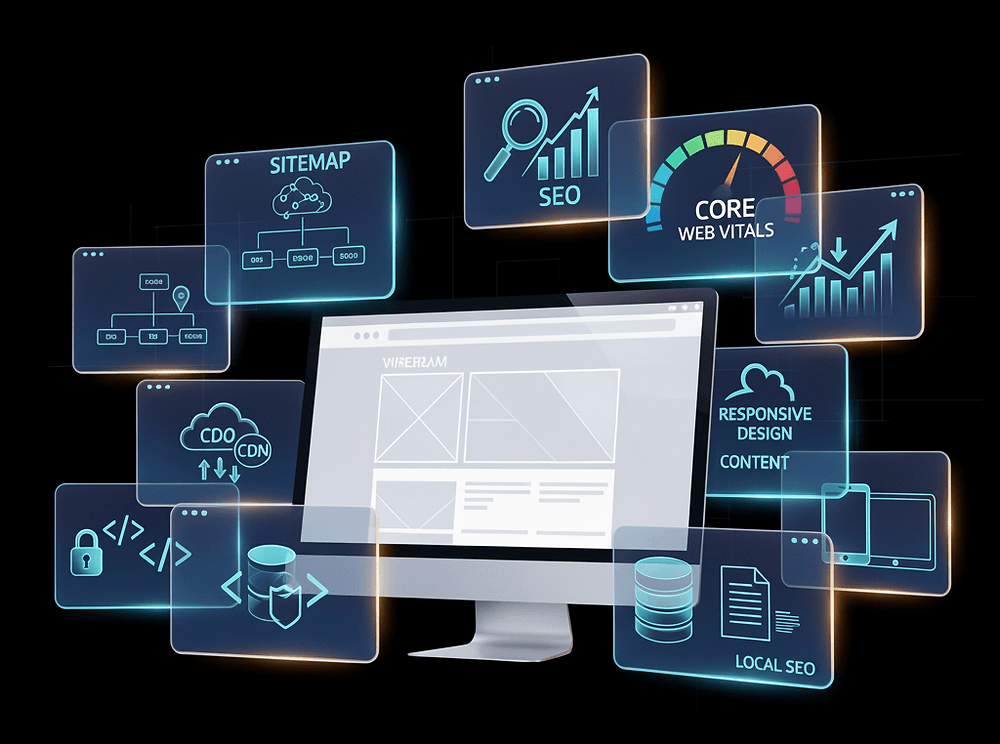
Core Web Vitals and User Experience
Google relies on Core Web Vitals to measure page performance and user satisfaction:
- Largest Contentful Paint (LCP): Measures loading performance (how fast the main content renders).
- Interaction to Next Paint (INP): Measures page responsiveness to user inputs like clicks and taps.
- Cumulative Layout Shift (CLS): Measures visual stability (preventing content from jumping around as elements load).
Mobile Performance Is Especially Important
Mobile connections can be volatile. Lightweight assets, optimized media files, and clean code are vital for ensuring phone users enjoy fast, seamless load times anywhere.
How Web Design Impacts SEO
Web design and search engine optimization are closely intertwined. Technical site architecture, mobile friendliness, page speeds, and structured content form the core foundation of search visibility.
Mobile-Friendly Design
Google primarily relies on mobile-first indexing. This means search algorithms assess the mobile version of your site first to determine rankings. Ensuring your mobile site contains full content, proper structured data, and working links is essential.
Website Structure and Navigation
A clean logical layout helps search engine crawlers understand how your pages relate to one another, making it easier to index deep service pages effectively.
Technical SEO Foundations
Behind the scenes, strong web design relies on clean URLs, proper canonical tags, XML sitemaps, schema markup, optimized meta descriptions, and compressed images that support search engine visibility.
Web Design and Local SEO for Houston Businesses
For local businesses, web design plays a direct role in converting nearby traffic into walk-in clients or phone consultations.
Make Your Location and Service Areas Clear
Visitors should immediately recognize where you operate and what areas you serve. Displaying local addresses and service boundaries prominently builds immediate trust.
Design Local Landing Pages for Users
Dedicated location pages that feature specific regional information, customer testimonials, local project showcases, and clear contact options perform exceptionally well in local search results.
Make Contact Information Easy to Find
Phone numbers, addresses, operating hours, interactive map directions, and quick contact forms should be visible and accessible across every device.
What Makes Good Web Design?
A successful modern website balances aesthetic appeal with technical functionality.
Clean and Consistent Visual Design
Balanced typography, intentional white space, disciplined color choices, and unified brand imagery.
Intuitive Navigation & Information Architecture
Logical page setups that let users find what they need in three clicks or fewer.
Mobile-First & Responsive Layouts
Interfaces engineered to function flawlessly on small screens before scaling up to desktop displays.
Fast & Accessible Experiences
Lightweight code and accessible contrast standards integrated right from the development phase.
Conversion-Focused Design
Prominent contact options, persuasive messaging, trust badges, and easy-to-use forms.
What Happens When Web Design Is Poor?
Cut corners on web design, and the business consequences show up quickly in your analytics and revenue.
Visitors May Leave Before Taking Action
Confusing menus, disruptive pop-ups, and dense walls of unformatted text cause visitors to leave without converting.
Your Brand Can Look Outdated
An old design, low-resolution graphics, or broken links signal neglect, causing potential clients to question your credibility and modern capabilities.
Poor Mobile Design Can Cost Opportunities
Buttons that are too small to tap or forms that fail on smartphone browsers cost you direct leads every single day.
A Slow Website Can Hurt the User Experience
Laggy page loads test user patience, sending visitors straight back to search engine results to click on a competitor.
How Often Should You Redesign Your Website?
There isn’t a rigid expiration date for websites, but technology, design standards, and user expectations evolve rapidly over time.
Signs Your Website Needs a Redesign
- It may be time for a comprehensive redesign if you encounter:
- Sharp drops in conversion rates or lead form submissions.
- Poor performance on mobile devices.
- Slow page speed and failing Core Web Vitals.
- Outdated branding or rigid back-end software that makes updating content difficult.
- Declining search engine rankings.
Redesign vs. Website Refresh
You don’t always need to tear everything down. A simple website refresh—updating imagery, tweaking page templates, rewriting text, or refining CTAs—can breathe new life into a site without requiring a complete rebuild.
Why Professional Web Design Is Worth the Investment
It can be tempting to try low-cost template builders, but DIY solutions rarely deliver custom conversion strategies or technical optimization.
Professional Design Is More Than Visuals
Experienced developers and designers analyze user journeys, plan detailed information architecture, optimize page structures, enforce accessibility standards, and build responsive layouts tailored to your sales funnel.
Better Design Can Support Business Growth
A professionally engineered website acts as an appreciating asset—attracting qualified traffic, building credibility, and consistently converting clicks into business opportunities.
Frequently Asked Questions About Why Web Design Is Important
Why is web design important for a business?
Web design establishes brand credibility, shapes first impressions, supports SEO, ensures mobile usability, and guides visitors through conversion funnels to generate leads and sales.
Why is responsive web design important?
Responsive design guarantees that your website automatically formats itself for optimal viewing on screens of any size—from smartphones to wide desktop displays—preventing usability issues.
Why is responsive web design important in 2026?
With mobile devices accounting for the majority of web traffic and Google enforcing strict mobile-first indexing, responsive design is essential for maintainable search visibility and user retention.
Can web design improve SEO?
Yes. Design impacts loading speed, mobile usability, site architecture, crawlability, internal link paths, and user engagement metrics—all critical factors in search rankings.
Does good web design increase conversions?
Absolutely. Clear visual hierarchy, fast-loading pages, frictionless contact forms, prominent calls-to-action, and trust signals make it easier for visitors to take key actions.
How often should a business redesign its website?
Businesses typically evaluate a redesign every 2 to 4 years, depending on shifts in branding, technology updates, conversion performance, and search engine standards.
Build a Better Website With Hyperlinks Media
When you need an online presence that turns passive visitors into active clients, partnering with an experienced team makes all the difference.
Houston Web Design Built Around Your Business
At Hyperlinks Media, we craft tailored online solutions designed around your unique market, target demographic, and growth goals. Whether you require custom layout strategies or dedicated wordpress web design, we build platforms that scale with your ambitions.
Responsive, User-Focused Website Design
From high-end, tailored interfaces with premium web design to robust online stores utilizing modern ecommerce design, every site we engineer is fully responsive, fast, and easy to navigate across all devices.
Web Design and Digital Marketing Under One Strategy
Design works best when backed by visibility. By combining custom web layouts with targeted SEO and ongoing web maintenance, we ensure your platform remains secure, fast-loading, and easily discoverable by local customers.
Request a Web Design Consultation
Ready to elevate your online presence and turn your site into a reliable revenue driver? Request a quote or contact us today to discuss your next project with our team.
Start Improving Your Website Today
Web design directly shapes how customers perceive your brand, navigate your services, and choose to do business with you. By investing in clean visual structures, responsive performance, fast load times, and conversion-focused layouts, you build a solid foundation for sustainable online growth.